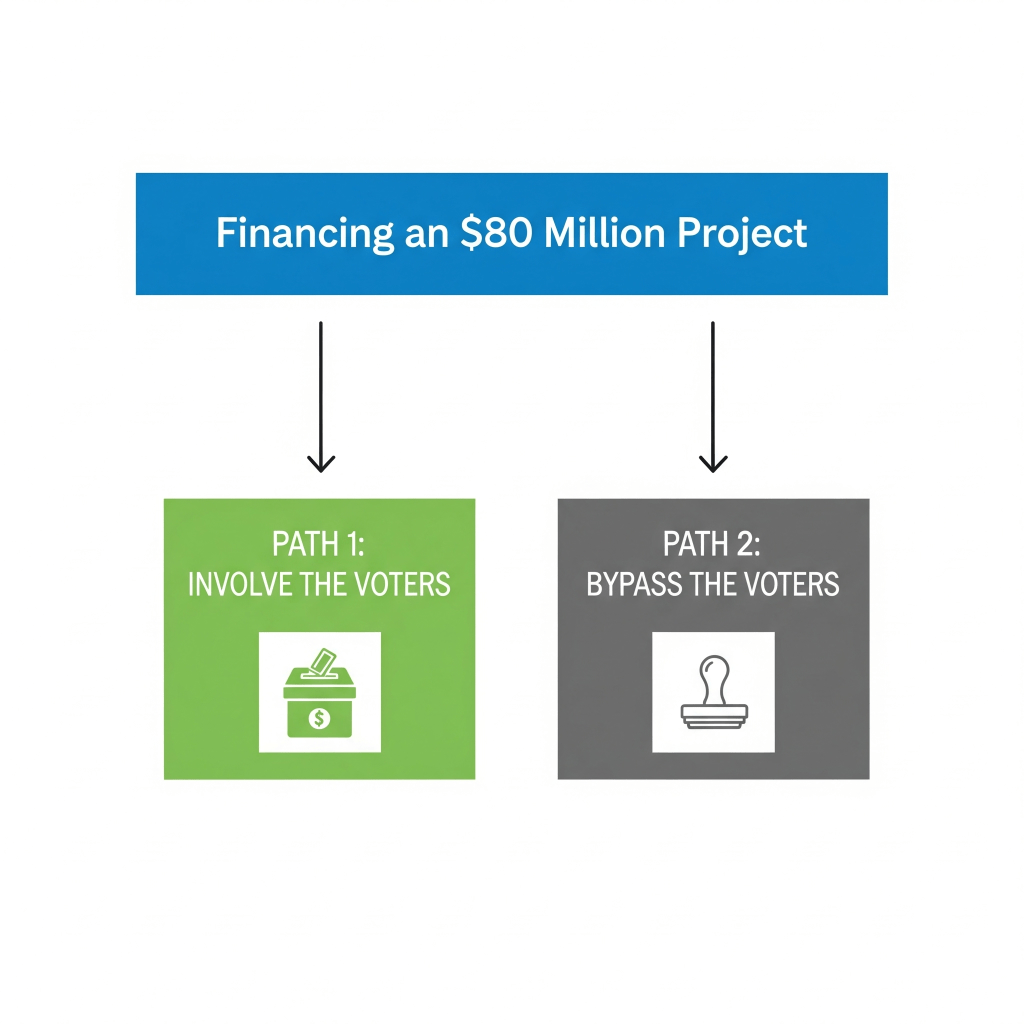
As a 19-year resident of Golden, I believe in a simple principle: you, the client, should have the final say on the biggest financial decisions our city makes. When it comes to taking on tens of millions of dollars in debt, your voice must be the most important one in the room.
Unfortunately, the financing for the “Heart of Golden” project was structured using a method designed to deny you that voice. To understand the choice facing our city, it’s critical to understand the difference between the tool chosen to bypass voters—Certificates of Participation (COPs)—and the architect’s blueprint for accountability: General Obligation (G.O.) bonds.
The Architect’s Path: General Obligation (G.O.) Bonds
This is the transparent and most accountable way to fund major projects. The city presents a clear plan and budget to the voters. Because G.O. bonds require voter approval by law, they represent the gold standard of fiscal accountability. This is the architect’s process: consult the client, present the blueprint, and seek approval before work begins.
The Handyman’s Method: Certificates of Participation (COPs)
This financing mechanism uses a legal interpretation to get around the requirement for a public vote. It’s the hallmark of a handyman’s approach: instead of a transparent, community-vetted blueprint, it focuses only on the functional objective—getting a building—while ignoring the details of cost and scope. It’s a process that avoids transparency by design, committing taxpayers to decades of payments without a clear, public discussion on the total price tag or how the money will be spent. It asks you to trust the process without ever showing you the plan.
Why This Matters for Golden
The choice to use the handyman’s method on the “Heart of Golden” project has clear consequences:
- It Silences the Voters: The most fundamental question—”Do the residents of Golden believe this project is worth the cost?”—is never asked.
- It Costs Residents More: Just like a shortcut in construction, this financing method comes with higher risks for investors and therefore higher interest rates—a “handyman’s premium” ultimately paid by the residents of Golden.
- Lost Opportunity to Fund Other Projects: Most importantly, the millions of dollars in funds and financing capacity now tied up in this project could have been directed to urgent priorities like wildfire mitigation or solutions for parking and traffic. When residents are shut out of the process, we get the projects the city wants, not the protections and services our families want and need.
My belief is simple: on the largest spending project in our city’s history, you deserve an architect, not a handyman. You deserve the final say. This isn’t just about one project; it’s about preventing this from becoming the standard for every major project in our future. That’s why I’m running for City Council—to restore fiscal accountability and ensure your voice is always the most important one in the room.
 Dan Sung for Golden